Chapter 11: Jerusalem, the Crusades, and Salahuddin — When the Ummah Faced the West
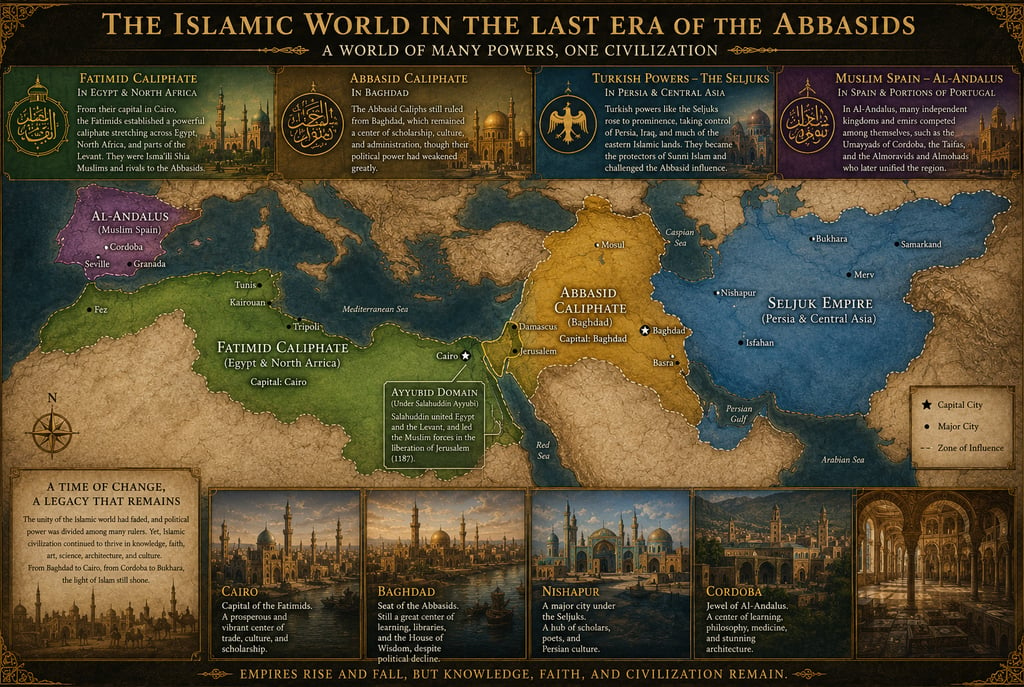
From Spain to Central Asia, the Islamic civilization had become one of the greatest centers of human achievement. Yet beneath the brilliance of scholars and empires, political cracks continued spreading silently through the Muslim world. The Abbasid Caliphs still ruled from Baghdad…but their direct power had weakened.
THE BRIEF HISTORY OF ISLAM!
Danish Shafiq
6/18/20264 min read
Chapter 11: Jerusalem, the Crusades, and Salahuddin — When the Ummah Faced the West
The Muslim world stood at its intellectual height. Baghdad shined with knowledge. Cordoba glowed with learning. Cairo rose with beauty and trade. From Spain to Central Asia, the Islamic civilization had become one of the greatest centers of human achievement. Yet beneath the brilliance of scholars and empires, political cracks continued spreading silently through the Muslim world.
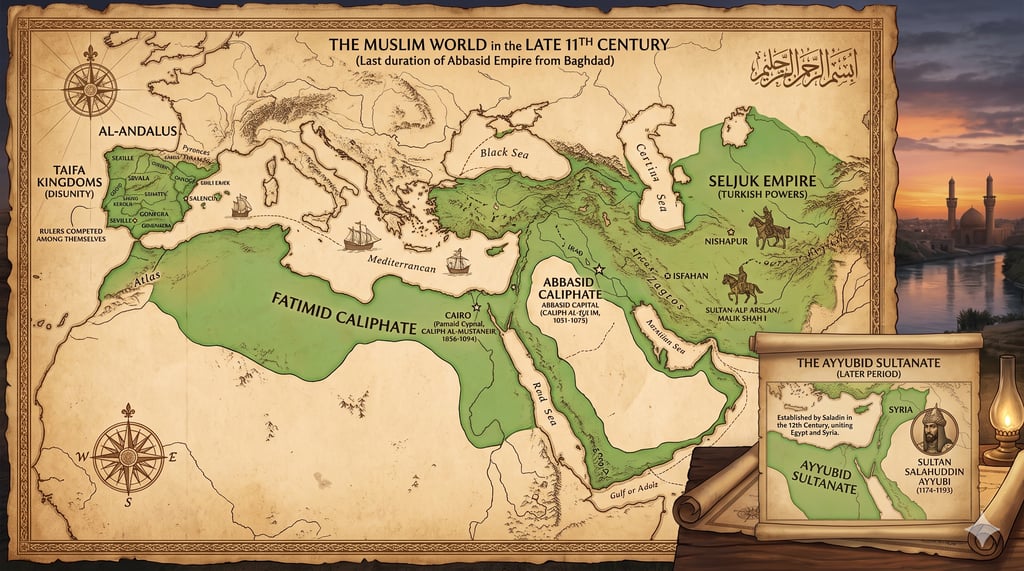
The Abbasid Caliphs still ruled from Baghdad…but their direct power had weakened. Regional dynasties began rising independently. In Egypt and North Africa emerged the Fatimids. In Persia and Central Asia rose Turkish powers like the Seljuks. In Muslim Spain, rulers competed among themselves.
Even many Christian chroniclers later respected Salahuddin’s character, discipline, and chivalry. For Muslims, he became a symbol of unity and honorable leadership. For many beyond Islam, he became one of the most respected figures of medieval history.
Yet the Crusades did not end immediately. Wars continued for generations. Kings from Europe continued arriving. Among them was Richard the Lionheart of England. Battles, negotiations, and uneasy truces followed. But the age had already revealed an important truth: Civilizations could either destroy one another through hatred… or preserve dignity even during war.
Meanwhile, while the Muslim world struggled against Crusaders in the West, another danger was quietly forming in the East. Far beyond the mountains and deserts of Central Asia, tribes were uniting beneath a leader unlike any the world had seen before. A man born into hardship… who would soon shake civilizations from China to Baghdad.
His name was Temujin.
History would remember him as:
Genghis Khan.
End of Chapter 11
And once again, the Muslim world found itself divided by politics, ethnicity, dynasties, and ambitions. The spirit of unity that had once existed during the earliest generations of Islam had become increasingly difficult to preserve.
Yet despite political division, civilization continued flourishing. And among the greatest cities of the age stood Cairo. Founded under the Fatimid dynasty, Cairo soon became one of the jewels of the Islamic world.
Markets overflowed with goods from Africa, India, Arabia, and the Mediterranean. Mosques rose beautifully into the sky. And among the Fatimids’ greatest contributions was the establishment of Al-Azhar. A center of scholarship that would survive centuries of wars, invasions, dynasties, and empires. Students traveled from distant lands to study Qur’an, law, language, theology, philosophy, and science. Even as rulers fought for power, knowledge still traveled through the veins of the Muslim world. But beyond the lands of Islam, another storm was rising.
In Europe, religious passion, political ambition, fear, and economic desire slowly merged together into a powerful movement. Christian rulers and church leaders began calling for armed campaigns toward the Holy Land.
Jerusalem.
The sacred city loved by Muslims, Christians, and Jews alike. For Muslims, it was the land connected to the Isra and Miraj — the miraculous night journey of Prophet Muhammad ﷺ. For Christians, it carried deep connection to the life of Jesus عليه السلام. For Jews, it remained tied to ancient prophetic history. And now, this sacred land was becoming the center of a coming war between worlds.
In 1095 CE, Pope Urban II called for what later became known as the First Crusade. Across Europe, thousands responded. Some marched for religion. Some for land. Some for wealth. Some for survival. And some simply followed the tide of history. The Crusader armies moved toward the East with crosses upon their banners. Soon, they entered the lands of the Muslim world.
Cities fell. Battles erupted. And then came one of the darkest moments of the Crusades: The capture of Jerusalem in 1099. When Crusader forces entered the city, mass killings followed. Muslims, Jews, and many civilians suffered terribly. Historical accounts describe streets filled with blood and fear. The sacred city had fallen.
Across the Muslim world, shock spread deeply. Yet political divisions prevented immediate unity. Many Muslim rulers fought one another while the Crusader states strengthened themselves across the Levant. For decades, the Muslim world struggled to respond collectively.
Then slowly, a new figure began to rise. Not from royal luxury… but from discipline, patience, and military service.
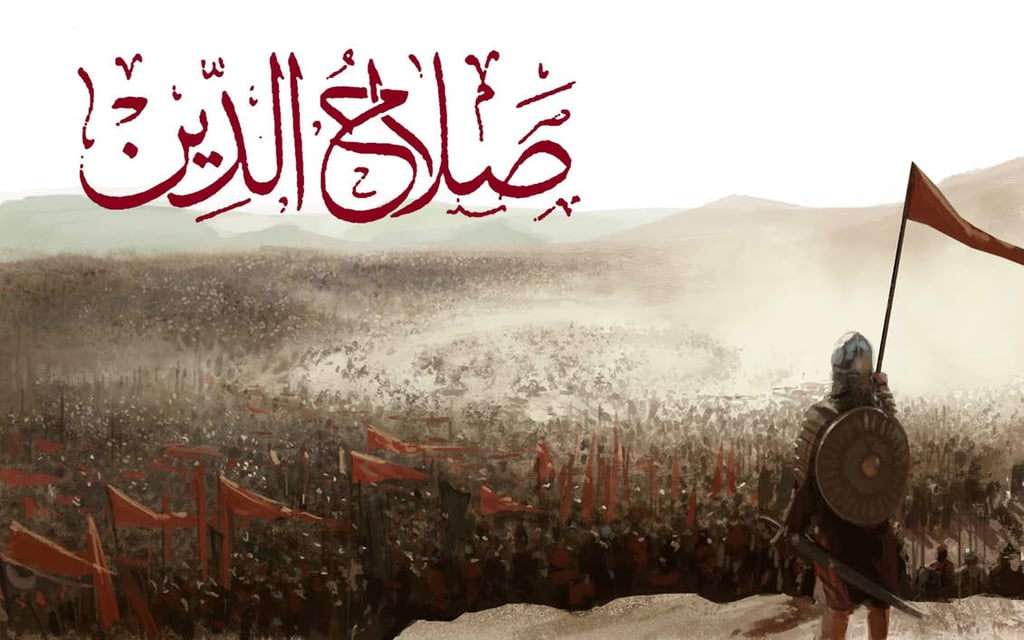
Salahuddin Yusuf ibn Ayyub. Known to history as Salahuddin Ayyubi.
Born into a Kurdish Muslim family, Salahuddin grew up during an age of conflict and fragmentation. Under the influence of leaders like Nur ad-Din Zangi, he learned that the greatest weakness of the Muslim world was not lack of courage… but lack of unity.
Salahuddin was not merely a warrior. He was disciplined. Thoughtful. Patient. Deeply connected to faith. He understood that before Jerusalem could be reclaimed, the divided Muslim world itself had to heal politically.
Gradually, Salahuddin united Egypt and Syria under his leadership. The Fatimid Caliphate in Egypt came to an end, and authority shifted once again toward Sunni political leadership while many Fatimid institutions and cultural influences continued shaping the region.
Then came the decisive confrontation. The Battle of Hattin. 1187 CE. Under the burning heat near the Horns of Hattin, Salahuddin’s forces achieved a major victory against the Crusader armies.
The road toward Jerusalem now stood open. And soon, the city that had suffered decades earlier prepared for another historic moment.
Salahuddin entered Jerusalem. But unlike the massacres that had followed the Crusader conquest years earlier, Salahuddin chose a different path. Revenge could have consumed the city. Instead, mercy entered with the victorious army. Many civilians were spared. Places of worship were protected.
And across different communities, people witnessed a ruler whose strength was balanced with restraint.