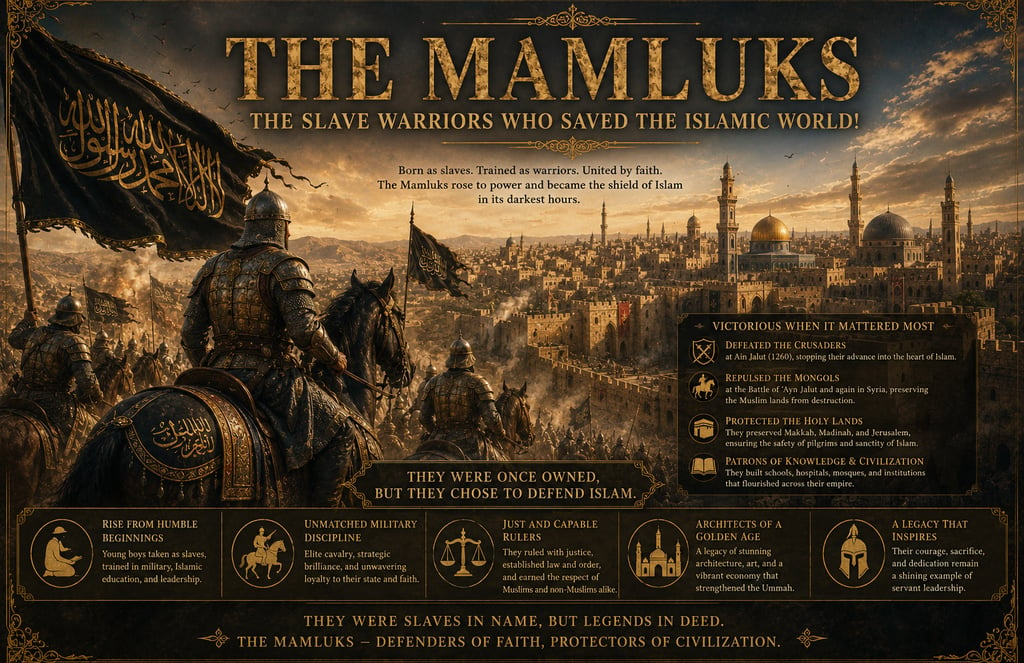
Chapter 13: The Mamluks — The Slave Warriors Who Saved the Islamic World
The great Abbasid Caliphate — once the center of knowledge, power, and civilization — now lay beneath ashes and silence. Libraries had burned. Scholars had been killed. The River Tigris had carried the ink of destroyed books through its waters. From Central Asia to Syria, fear spread like a shadow. The Mongols seemed unstoppable.
THE BRIEF HISTORY OF ISLAM!
Danish Shafiq
6/18/20264 min read
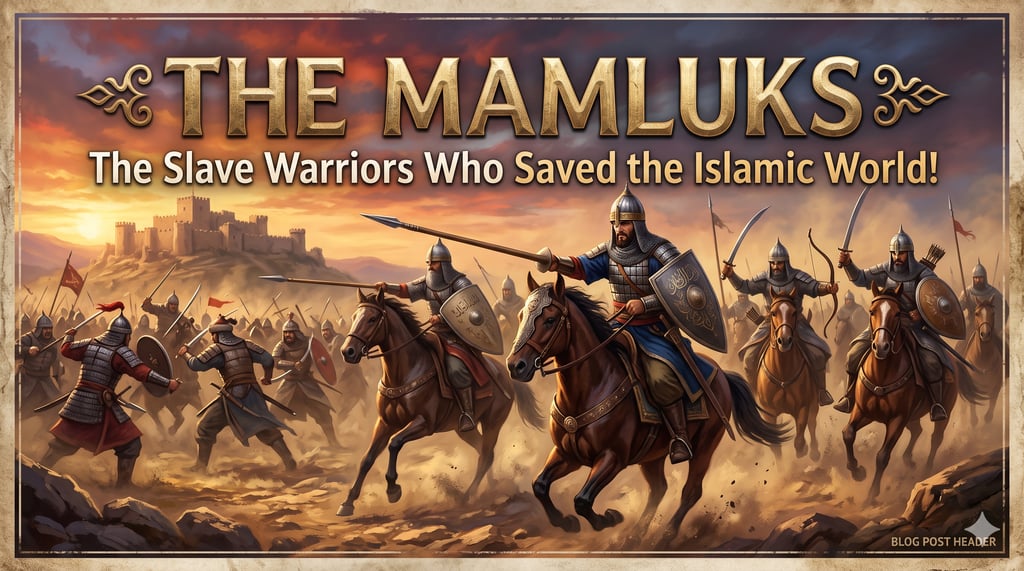
Chapter 13: Mamluks — The Slave Warriors Who Saved the Islamic World!
The Muslim world stood in shock.
Baghdad had fallen.
The great Abbasid Caliphate — once the center of knowledge, power, and civilization — now lay beneath ashes and silence. Libraries had burned. Scholars had been killed. The River Tigris had carried the ink of destroyed books through its waters.
From Central Asia to Syria, fear spread like a shadow. The Mongols seemed unstoppable. Cities surrendered before battles even began. Kingdoms collapsed. Entire populations fled in terror at the mere mention of Mongol armies approaching. For many Muslims, it felt as though the golden age of Islam had ended forever.
And yet… history often hides hope in the most unexpected places. Far away in Egypt, another power had quietly been rising. Not a dynasty of princes. Not sons of kings. Not descendants of ancient royal families. But men who had once been bought and sold as slaves.
The Mamluks. The word “Mamluk” itself meant: “Owned.”
Many of them had originally come from Turkic and Central Asian backgrounds. As children or young men, they were brought into military systems across the Muslim world. They were trained intensely in warfare, discipline, horseback combat, archery, and strategy.
But over time, these slave soldiers became something extraordinary.
Elite warriors. Disciplined beyond ordinary armies. Bound not by tribe or royal blood… but by loyalty, training, and survival.
In Egypt, the Mamluks gradually rose in political and military influence until they took control of the region itself. And now, as the Mongol storm approached Syria and Egypt after destroying Baghdad, the Muslim world looked toward them with desperate hope.
Because if Egypt fell… the road toward Makkah and Madinah could stand vulnerable. The heartlands of Islam itself seemed threatened. At this critical moment emerged one of the most remarkable leaders in Islamic history:
Sultan Saif ad-Din Qutuz. A former slave. A man shaped by hardship and war. Qutuz understood the danger clearly. The Mongols had shattered mighty empires before them. No ruler seemed capable of stopping their advance. Some advised surrender. Others feared resistance would only bring destruction.
But Qutuz refused to bow.
When Mongol envoys arrived demanding submission, he made a decision that shocked the age. The envoys were executed. It was not merely defiance. It was a declaration: The Muslim world would fight. Beside Qutuz stood another brilliant commander: Baibar, Fierce, Strategic, Fearless in battle.
Together, the Mamluks prepared for what many believed would decide the fate of Islamic civilization itself.
Then came the year 1260 CE. The plains of Ain Jalut in Palestine. For the first time in decades, the Mongols faced an enemy unwilling to collapse in fear. The battle began. Dust rose beneath galloping horses. Arrows darkened the skies. Steel crashed against steel. The Mongols fought with their usual terrifying discipline and speed. But the Mamluks were different. They understood steppe warfare. They matched the Mongols in cavalry tactics, mobility, and endurance. And slowly, the impossible began happening. The Mongol advance broke.
At Ain Jalut, the Mongols suffered one of their first major defeats. The shock spread across the world. The seemingly unstoppable storm from the East had finally been halted. For Muslims everywhere, the victory carried enormous emotional weight.
After years of fear, destruction, and humiliation… hope returned.
The Mamluks had not merely won a battle. They had saved the central Muslim lands from total collapse. Had they failed, the history of the Middle East — and perhaps Islam itself — might have unfolded very differently. Under the Mamluks, Egypt and Syria gradually became new centers of Islamic scholarship and stability after the destruction of Baghdad. Cairo flourished. Mosques expanded. Madrasas and centers of learning continued preserving Islamic sciences, Qur’anic studies, Hadith, law, and scholarship.
The Mamluks also protected the holy cities of Makkah and Madinah, serving as guardians of the sacred pilgrimage routes.
And while political struggles still existed, the spiritual and intellectual life of the Muslim world survived.
At the same time, something unexpected slowly unfolded within the Mongol world itself.
The same Mongol tribes that had once burned Muslim cities began encountering Islam more deeply through scholars, merchants, Sufis, marriages, and ordinary Muslim communities.
Over generations, many Mongols embraced Islam. The religion they had once fought against entered their hearts. History moved in strange ways. Empires that destroy civilizations sometimes become transformed by them.
Meanwhile, across the Islamic world, another spiritual force continued growing quietly beside kings and armies.
The Sufis. Scholars. Saints. Travelers. Men who reminded people that beyond political victories and defeats, the soul still belonged to Allah.
From Central Asia to India, Sufi teachers spread humility, remembrance, compassion, and spiritual discipline among ordinary people. Because after centuries of wars, invasions, and bloodshed, many hearts longed once again for peace. Yet even as the Mamluks defended the Muslim world, new powers were slowly beginning to rise beyond the horizon.
In Anatolia — present-day Turkey — small Turkish Muslim states were emerging from the ruins of older empires.
Among them was a modest frontier principality led by a tribal family whose name would one day echo across continents.
The House of Usman. The Ottomans.
And soon, a new chapter of Islamic history would begin.
End of Chapter 13