
Chapter 4: Uthman رَضِيَ ٱللَّٰهُ عَنْهُمْ – The Gentle Soul of Islam
Uthman and Ali رَضِيَ ٱللَّٰهُ عَنْهُمْ – Unity, Discord, and the Birth of Division
THE BRIEF HISTORY OF ISLAM!
Danish Shafiq
6/12/20264 min read
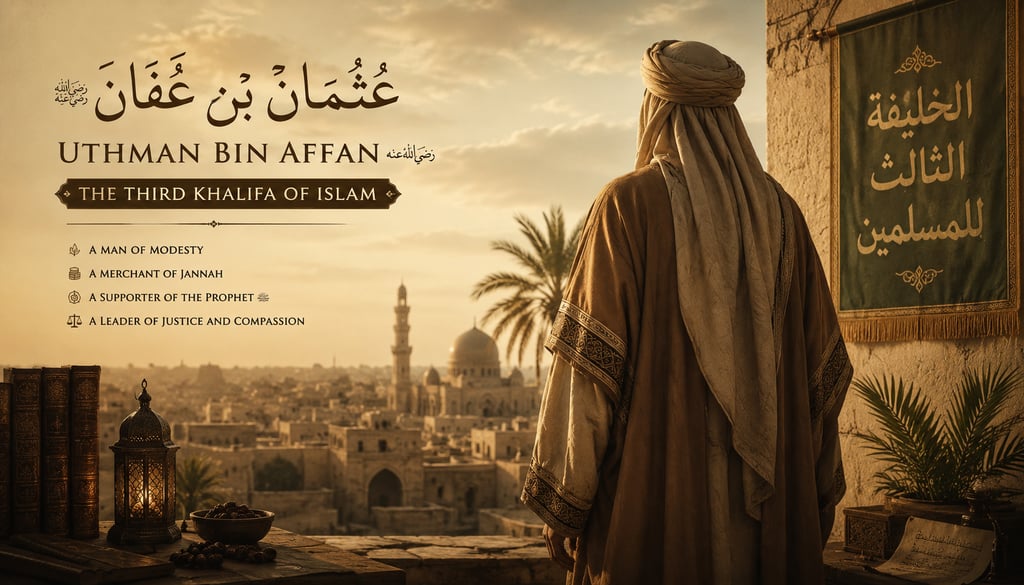
Chapter 4: Uthman رَضِيَ ٱللَّٰهُ عَنْهُمْ – The Gentle Soul of Islam
As the city of Medina mourned the passing of Umar ibn Al-Khattab رَضِيَ ٱللَّٰهُ عَنْهُ , an uneasy calm filled the air. Another giant of Islam had fallen. The deserts of Arabia, once divided by tribal hatred, had now become part of a civilization stretching beyond imagination. Persia had collapsed. Rome trembled at its borders. New lands entered Islam every year. But beneath the victories, another challenge had begun emerging quietly:
The challenge of power itself. And now the Ummah searched for another leader.
People gathered in the Prophet’s صَلَّى ٱللَّٰهُ عَلَيْهِ وَسَلَّمَ Mosque, murmuring anxiously about who would succeed Umar رَضِيَ ٱللَّٰهُ عَنْهُ as Caliph. Umar رَضِيَ ٱللَّٰهُ عَنْهُ , even in his final moments, had thoughtfully appointed a council of six trusted companions to select his successor, hoping they would find unity once again.
The council debated long into the night, finally agreeing upon a quiet, gentle man named Uthman ibn Affan رَضِيَ ٱللَّٰهُ عَنْهُ . Uthman رَضِيَ ٱللَّٰهُ عَنْهُ was noble and generous, known for his kindness, humility, and his deep love for the Qur’an. He was a man of great wealth, yet he lived simply, quietly donating most of his fortune to charity. Many called him “Uthman Ghani”—Uthman the Generous.
Long before Islam spread across nations, Uthman رَضِيَ ٱللَّٰهُ عَنْهُ had already chosen faith during its weakest days in Makkah. At that time becoming Muslim meant danger. Families disowned believers. Trade collapsed around them. Torture filled the streets of Makkah. Yet Uthman رَضِيَ ٱللَّٰهُ عَنْهُ accepted Islam quietly and sincerely. And perhaps no relationship reflected his purity more than his bond with Prophet Muhammad ﷺ. The Prophet ﷺ loved him deeply. So deeply that Uthman married not one… but two daughters of the Messenger of Allah ﷺ.
First Ruqayyah رضي الله عنها. Then after her passing, Umm Kulthum رضي الله عنها. No other man in history received such an honor. And so Uthman became known as: Dhun-Nurayn — “The Possessor of Two Lights.” Yet despite this closeness to the Prophet ﷺ, Uthman remained remarkably humble. He was wealthy. Very wealthy. But unlike many people consumed by wealth, Uthman treated money as a tool to serve Allah rather than himself.
When Muslims in Madinah suffered from water shortages, he purchased the famous Well of Rumah and gifted it freely to the people. When the difficult expedition of Tabuk approached and Muslims lacked supplies, Uthman donated caravans, gold, camels, provisions, and resources in enormous amounts. The companions watched in amazement. And Prophet Muhammad ﷺ smiled with deep affection toward him. Such was the sincerity hidden inside his soul. But Uthman was not merely generous. He was also among those who endured hardship beside the Prophet ﷺ during the fragile early years of Islam. He migrated for the sake of Allah. Faced persecution. Sacrificed comfort.
And remained among the trusted companions of the Prophet ﷺ through moments of fear, battle, grief, and revelation. Even his modesty became legendary among the companions. It is narrated that Prophet Muhammad ﷺ once remarked regarding him:
«“Should I not feel shy before a man whom even the angels feel shy before?”»
This was the heart of Uthman. Gentle. Reserved. Pure-hearted. Yet history is often unkind to gentle souls.
The Gentle Caliph!
Uthman’s رَضِيَ ٱللَّٰهُ عَنْهُ caliphate began peacefully. He ruled gently, preferring mercy over harsh punishment, forgiveness over vengeance. Under his leadership, Islam’s borders continued to expand into North Africa, further into Persia, and deeper into Asia. The empire grew vast and wealthy, and Uthman generously spent his own resources to support mosques, schools, and roads.
However, this growth brought unforeseen troubles. With wealth and success came envy, and new problems emerged that earlier Caliphs had not faced. Far-flung provinces grew restless, accusing some governors of greed and injustice. Complaints reached Medina more frequently, causing anxiety and tension among the companions of the Prophet صَلَّى ٱللَّٰهُ عَلَيْهِ وَسَلَّمَ.
Preserving the Qur’an!
Uthman رَضِيَ ٱللَّٰهُ عَنْهُ understood the importance of preserving Islam’s unity. Concerned that Muslims across the expanding empire were reciting the Qur’an differently, Uthman رَضِيَ ٱللَّٰهُ عَنْهُ gathered trusted scholars. He tasked them with compiling one standard version of the Qur’an, carefully comparing all existing copies. He then sent these approved copies to every corner of the Muslim world.
At first, some questioned Uthman’s رَضِيَ ٱللَّٰهُ عَنْهُ actions, but soon it became clear how vital his decision was. Today, millions of Muslims around the world recite the very same Qur’an thanks to Uthman’s wise decision.
Seeds of Discord!
But the peace and harmony of Uthman’s رَضِيَ ٱللَّٰهُ عَنْهُ rule began to weaken slowly. Critics accused Uthman رَضِيَ ٱللَّٰهُ عَنْهُ of favoritism, claiming he gave powerful positions to his relatives. Although Uthman رَضِيَ ٱللَّٰهُ عَنْهُ denied wrongdoing, anger and bitterness simmered beneath the surface. Whispered complaints became loud accusations, and eventually, open rebellion.
Angry groups marched toward Medina from Egypt, Kufa, and Basra, demanding Uthman رَضِيَ ٱللَّٰهُ عَنْهُ remove certain governors. They surrounded Uthman’s رَضِيَ ٱللَّٰهُ عَنْهُ house, demanding immediate action. Yet Uthman رَضِيَ ٱللَّٰهُ عَنْهُ , ever peaceful, refused to shed Muslim blood or allow violence. He calmly said, “I will not be the first to divide this Ummah.”
The rebels would not listen. The siege tightened, and eventually, tragically, rebels burst into Uthman’s رَضِيَ ٱللَّٰهُ عَنْهُ home and attacked him as he read the Qur’an. With his blood staining the sacred pages, Uthman رَضِيَ ٱللَّٰهُ عَنْهُ died, leaving behind a shattered community.
And Uthman ibn Affan رَضِيَ ٱللَّٰهُ عَنْهُ — one of the closest companions of Prophet Muhammad ﷺ — was martyred while reading the Book of Allah. According to many narrations, drops of his blood fell upon the pages of the Qur’an itself. The man who preserved the Qur’an left this world with the Qur’an in his hands.
Silence spread across Madinah. Shock entered the hearts of the companions. And with the death of Uthman RA, something far greater than a caliph had fallen. The unity of the Ummah had cracked open. Ahead now lay civil war. Division. Karbala. Dynasties. And generations of pain.
Yet centuries later, the name of Uthman ibn Affan رَضِيَ ٱللَّٰهُ عَنْهُ still softens hearts. Because in a world consumed by power and noise, he remained gentle until his final breath.
And perhaps sometimes… gentleness itself is a form of greatness.
(End of Chapter 4)