
Chapter 5: Ali رَضِيَ ٱللَّٰهُ عَنْهُمْ – The Lion Raised Beside Revelation
Whether understood literally or spiritually, generations of Muslims saw immense wisdom flowing from Ali’s words, reflections, and character. He became known not only for the sword…but for understanding.
THE BRIEF HISTORY OF ISLAM!
Danish Shafiq
6/12/20265 min read
Chapter 5: Ali رَضِيَ ٱللَّٰهُ عَنْهُمْ – The Lion Raised Beside Revelation
Ali رَضِيَ ٱللَّٰهُ عَنْهُ – The Caliph in Stormy Waters!
After Uthman’s رَضِيَ ٱللَّٰهُ عَنْهُ assassination, panic and confusion spread throughout Medina. Finally, eyes turned toward Ali ibn Abi Talib رَضِيَ ٱللَّٰهُ عَنْهُ , the Prophet’s صَلَّى ٱللَّٰهُ عَلَيْهِ وَسَلَّمَ cousin and son-in-law—a man respected for bravery, wisdom, and deep faith. Reluctantly, Ali رَضِيَ ٱللَّٰهُ عَنْهُ agreed to become Caliph, knowing that great difficulties lay ahead.
Ali رَضِيَ ٱللَّٰهُ عَنْهُ was strong, wise, and compassionate, deeply loved by many Muslims. He was among Islam’s greatest warriors, famed for his courage in battles fought alongside the Prophet صَلَّى ٱللَّٰهُ عَلَيْهِ وَسَلَّمَ. Yet now, Ali رَضِيَ ٱللَّٰهُ عَنْهُ faced battles of a different kind—internal divisions tearing apart the community he dearly loved.
Before empires carried the banner of Islam across continents… before kings ruled from palaces… before civil wars divided the Ummah…there was a young boy growing quietly beside Prophet Muhammad ﷺ. That boy was:
Ali ibn Abi Talib رَضِيَ ٱللَّٰهُ عَنْهُ . He did not discover Islam through stories told by others. He witnessed revelation entering the world itself. Raised within the household of the Prophet ﷺ, Ali رَضِيَ ٱللَّٰهُ عَنْهُ grew up watching the honesty, patience, and purity of Prophet Muhammad ﷺ long before prophethood publicly changed Arabia forever.
And when revelation finally descended upon the Cave of Hira…Ali was among the first souls to believe. Young. Fearless. Sincere. At a time when Quraysh mocked, tortured, and hunted the believers, Ali رَضِيَ ٱللَّٰهُ عَنْهُ stood beside the Prophet ﷺ without hesitation. Not because of politics. But because love and truth had already entered his heart. One night, that loyalty would become immortal.
The leaders of Quraysh had surrounded the Prophet’s ﷺ house. Their plan was simple: to assassinate Prophet Muhammad ﷺ before he could leave Makkah. Inside the house, danger waited outside every wall. And yet Ali رَضِيَ ٱللَّٰهُ عَنْهُ agreed to sleep in the Prophet’s ﷺ bed so He ﷺ could escape safely toward Madinah. It was not merely courage. It was complete trust. A young man willing to sacrifice his life for the Messenger of Allah ﷺ. That night became one of the most powerful moments of loyalty in Islamic history. And throughout the years that followed, Ali رَضِيَ ٱللَّٰهُ عَنْهُ remained among the bravest defenders of Islam.
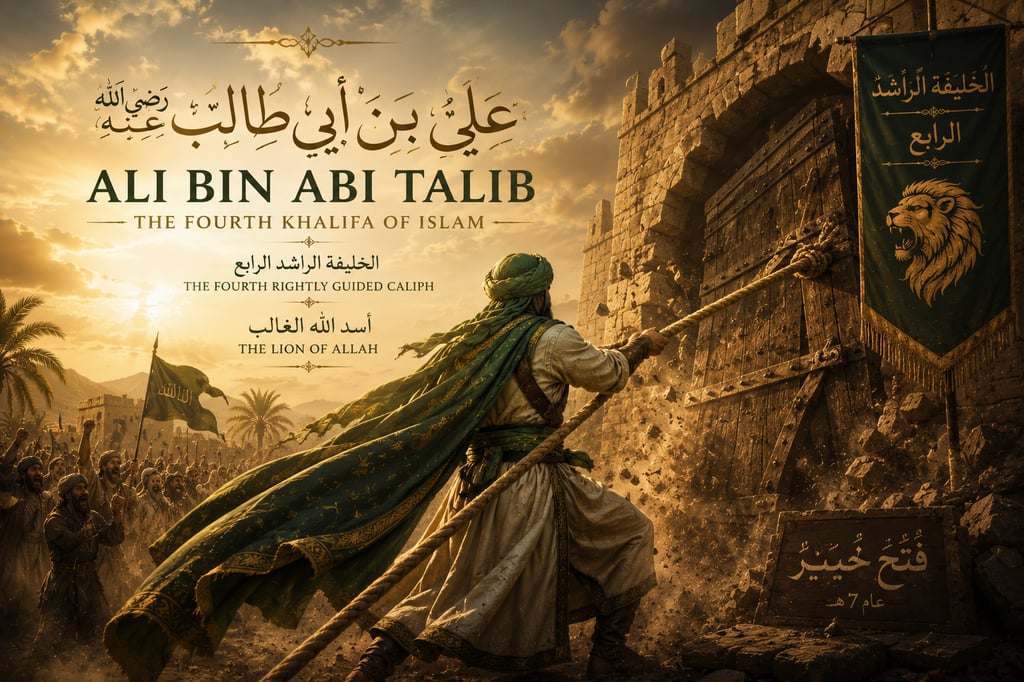
At Badr, he fought when Muslims were vastly outnumbered. At Uhud, he stood firm while chaos spread across the battlefield. At Khandaq, he confronted warriors feared across Arabia. And at Khaybar came one of the most beloved moments remembered by Muslims for centuries.
The fortress of Khaybar had become nearly impossible to penetrate. The Muslims struggled repeatedly against its defenses.
Then Prophet Muhammad ﷺ announced:
«“Tomorrow I will give the banner to a man who loves Allah and His Messenger, and Allah and His Messenger love him.”»
The companions spent the night wondering who would receive this honor. The next morning, the Prophet ﷺ called for Ali رَضِيَ ٱللَّٰهُ عَنْهُ . And Ali رَضِيَ ٱللَّٰهُ عَنْهُ carried the banner forward. But despite his courage, Ali رَضِيَ ٱللَّٰهُ عَنْهُ never resembled the image of a proud conqueror. His strength was tied to humility. His bravery was tied to faith. And his heart remained deeply connected to spirituality and knowledge.
The Prophet ﷺ once said:
«“I am the city of knowledge and Ali is its gate.”»
Whether understood literally or spiritually, generations of Muslims saw immense wisdom flowing from Ali’s رَضِيَ ٱللَّٰهُ عَنْهُ words, reflections, and character. He became known not only for the sword… but for understanding.
And then there was Fatimah رضي الله عنها. The beloved daughter of Prophet Muhammad ﷺ.
Ali رَضِيَ ٱللَّٰهُ عَنْهُ married her not through wealth or royal power, but through sincerity and simplicity. Their home remained humble. Sometimes hunger entered their household. Sometimes hardship filled their days. Yet within this simple home emerged one of the most beloved families in Islamic history.
Hasan رَضِيَ ٱللَّٰهُ عَنْهُ and Husayn رَضِيَ ٱللَّٰهُ عَنْهُ
The Prophet ﷺ loved these children deeply. He ﷺ carried them upon his shoulders. Kissed them openly before the companions. And often prolonged his prayer when they climbed upon his back as children. These were not merely political figures. They were a family built upon love, sacrifice, simplicity, and faith. And perhaps this is why the later tragedies of Islamic history became so emotionally unbearable for millions of Muslims. Because the family most beloved to the Prophet ﷺ would later endure immense suffering.
After the martyrdom of Uthman RA, the Muslim world entered chaos.
The Great Fitnah!
Ali’s رَضِيَ ٱللَّٰهُ عَنْهُ caliphate began in turmoil. Many companions, including Aisha رَضِيَ ٱللَّٰهُ عَنْهَا, the beloved wife of Prophet Muhammad صَلَّى ٱللَّٰهُ عَلَيْهِ وَسَلَّمَ, demanded immediate punishment for Uthman’s رَضِيَ ٱللَّٰهُ عَنْهُ killers. Ali رَضِيَ ٱللَّٰهُ عَنْهُ wished justice as well, but felt restoring stability must come first. Tension quickly turned into armed conflict.
The first tragic confrontation was the "Battle of the Camel" (Jamal), named after Aisha’s رَضِيَ ٱللَّٰهُ عَنْهَا camel, around which intense fighting occurred. Ali رَضِيَ ٱللَّٰهُ عَنْهُ emerged victorious, treating his opponents with respect and kindness, but the cost was immense. For the first time, Muslims had openly fought other Muslims—a painful, heartbreaking turning point.
Yet another crisis arose swiftly. Muawiyah رَضِيَ ٱللَّٰهُ عَنْهُ , governor of Syria and relative of Uthman رَضِيَ ٱللَّٰهُ عَنْهُ also demanded immediate justice for Uthman’s رَضِيَ ٱللَّٰهُ عَنْهُ death. Refusing to recognize Ali’s رَضِيَ ٱللَّٰهُ عَنْهُ authority, Muawiyah رَضِيَ ٱللَّٰهُ عَنْهُ prepared his army for war, believing Ali رَضِيَ ٱللَّٰهُ عَنْهُ was protecting Uthman’s رَضِيَ ٱللَّٰهُ عَنْهُ murderers.
Battle of Siffin – Brothers at War!
Ali رَضِيَ ٱللَّٰهُ عَنْهُ , hoping for peace, tried negotiation first, but Muawiyah رَضِيَ ٱللَّٰهُ عَنْهُ refused compromise. The two armies met at Siffin, along the Euphrates River. Days of fierce fighting followed, brother against brother, friend against friend. Ali’s رَضِيَ ٱللَّٰهُ عَنْهُ army was close to victory when Muawiyah’s رَضِيَ ٱللَّٰهُ عَنْهُ soldiers raised copies of the Qur’an, pleading for arbitration.
Hoping to save lives, Ali رَضِيَ ٱللَّٰهُ عَنْهُ agreed, though many of his followers objected. Unfortunately, the arbitration failed to solve the dispute and deepened divisions further. Some followers angrily left Ali رَضِيَ ٱللَّٰهُ عَنْهُ , forming a new group called the Khawarij, believing both Ali رَضِيَ ٱللَّٰهُ عَنْهُ and Muawiyah رَضِيَ ٱللَّٰهُ عَنْهُ had betrayed Islam.
Ali himself never appeared attached to worldly kingship. His speeches reflected sorrow more than triumph. Again and again he warned against division, ego, and extremism. But the wounds had already spread too far. Then emerged another dangerous force: Fanaticism. A radical faction later known as the Khawarij declared many Muslims sinful and illegitimate. Hatred replaced wisdom. Extremism replaced balance.
Ali’s رَضِيَ ٱللَّٰهُ عَنْهُ Final Days!
Ali’s رَضِيَ ٱللَّٰهُ عَنْهُ caliphate continued amidst ongoing struggles, rebellions, and heartbreak. He tirelessly tried to heal divisions, but the wounds were deep and painful.
One morning, as Ali رَضِيَ ٱللَّٰهُ عَنْهُ stood praying in Kufa’s mosque, a young Khawarij assassin struck him with a poisoned sword. Ali رَضِيَ ٱللَّٰهُ عَنْهُ fell wounded, murmuring softly, “I have succeeded, by the Lord of the Kaaba.” Days later, he passed away, ending a turbulent yet noble era.
Yet despite all the conflicts surrounding his life, Ali’s رَضِيَ ٱللَّٰهُ عَنْهُ legacy survived far beyond politics. For Sunnis, he remained among the greatest companions of the Prophet ﷺ. For Shias, he became the first Imam and spiritual heir of the Prophet’s household. For Sufis, he symbolized wisdom, spirituality, and nearness to Allah ل جلاله وجل شانه. And for countless hearts across centuries, Ali ibn Abi Talib رَضِيَ ٱللَّٰهُ عَنْهُ became something greater than a ruler.
He became the image of courage carrying grief… knowledge carrying humility… and faith carrying patience through darkness. Perhaps that is why even today, when his name is mentioned, hearts still soften. Because some souls leave behind more than history.
They leave behind light.
Legacy of Unity and Division!
The deaths of Uthman رَضِيَ ٱللَّٰهُ عَنْهُ and Ali رَضِيَ ٱللَّٰهُ عَنْهُ left deep scars. Muslims who had once fought side by side against empires now stood divided.
The Muslim world, once unified, now stood at a crossroads. Yet through all the chaos, Islam survived, continuing its extraordinary journey forward. The community had been deeply shaken—but its faith remained strong, awaiting the next chapter in its remarkable story.
(End of Chapter 5)