Chapter 10: Baghdad — When Knowledge Became Light
The deserts that once witnessed tribal wars had now become connected to mighty cities, oceans, trade routes, libraries, and civilizations. From Spain in the West to Sindh in the East, the world of Islam stretched across continents.
THE BRIEF HISTORY OF ISLAM!
Danish Shafiq
6/18/20265 min read
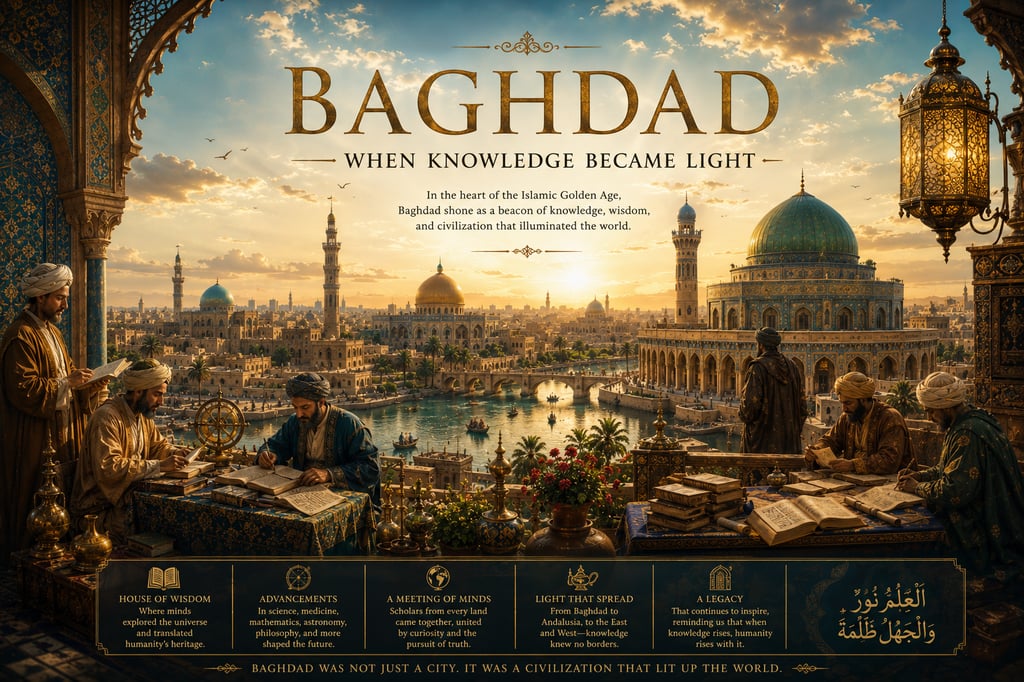
Chapter 10: Baghdad — When Knowledge Became Light
The Muslim world was entering a different age.
The deserts that once witnessed tribal wars had now become connected to mighty cities, oceans, trade routes, libraries, and civilizations. From Spain in the West to Sindh in the East, the world of Islam stretched across continents.
The Umayyads had fallen. The black banners of the Abbasids now rose over the Muslim world. And beside the calm waters of the River Tigris, a new city emerged that would soon become one of the greatest centers of civilization in human history:
Baghdad. The city did not rise merely through stone and wealth. It rose through ideas.
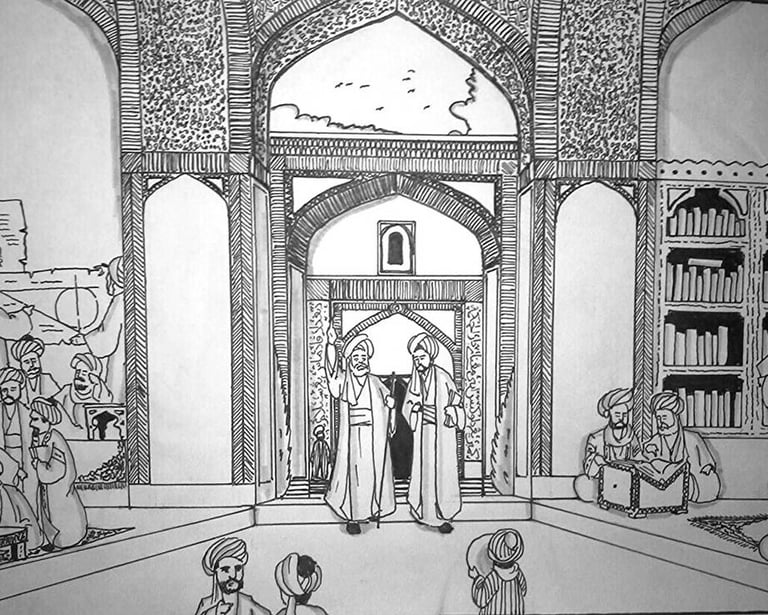
Under the Abbasids, especially during rulers like Harun al-Rashid and Al-Mamun, Baghdad transformed into the intellectual heart of the world. Traders arrived from India, China, Africa, Persia, and Byzantium. Languages mixed in its markets. Scholars debated in its mosques. Caravans brought manuscripts from distant civilizations.
And for a moment in history, the Muslim world became the meeting place of human knowledge. At the center of this intellectual awakening stood Bayt al-Hikmah: The House of Wisdom. Inside its halls, translators worked tirelessly.
Greek philosophy. Persian sciences. Indian mathematics. Ancient astronomy. Medicine. Geography. Logic.
All were translated into Arabic, studied carefully, debated passionately, and expanded further. For many Muslims of that age, knowledge itself became a sacred pursuit.
The Qur’an had repeatedly asked mankind to think… to observe… to reflect upon the stars, mountains, oceans, and the signs of Allah spread across creation. And so a civilization of learning began to flourish. Scholars observed the movement of planets. Doctors developed hospitals and medical texts. Engineers experimented with machines and water systems. Mathematicians transformed numbers into tools that would later shape the modern world.
Among the greatest minds of this age was Muhammad ibn Musa al-Khwarizmi. A brilliant mathematician whose work laid the foundations of algebra. Even the word “algorithm” would later emerge from his name. Using numerical systems influenced heavily by Indian mathematics, scholars like Al-Khwarizmi transformed science, trade, astronomy, and calculation forever.
From India came ideas that traveled into Baghdad. And from Baghdad, those ideas would later travel into Europe and beyond.
Then came Ibn Sina — Avicenna. Physician. Philosopher. Scholar. His medical encyclopedia would influence medicine for centuries.
Elsewhere, Al-Razi advanced chemistry and healing. Astronomers built observatories beneath open skies. Paper manufacturing spread books farther than ever before. Libraries overflowed with manuscripts. In Cordoba, Cairo, and Baghdad, the Muslim world became illuminated not merely by lamps…but by curiosity itself.
And yet…beneath the brilliance of civilization, another reality also existed.
The Abbasids were not angels. Like many empires before them, they too struggled with power, politics, fear, and control. Some Abbasid rulers patronized scholars generously. Others feared scholars whose influence among the people grew too strong. And some of the greatest figures in Islamic history suffered under political authority despite dedicating their lives to knowledge and faith.
Among them was Imam Abu Hanifa Rahmatullahi Alayh.
A scholar whose understanding of Islamic law would later influence millions across the Muslim world, especially in regions like Central Asia, Turkey, and the Indian subcontinent. Abu Hanifa believed that scholars should remain morally independent from rulers. When pressured to accept positions connected to Abbasid authority, he refused. Reports describe how he faced imprisonment and harsh treatment because of his stance. Yet he remained firm. He chose conscience over comfort. And his knowledge survived long after kings and palaces faded into history.
Likewise, many descendants of Prophet Muhammad ﷺ — the Ahl al-Bayt — continued living under political pressure during different periods of Abbasid rule. Although the Abbasids had partly risen to power using sympathy for the family of the Prophet ﷺ, relations later became tense and complicated.
Among the most respected figures of this era was Imam Jafar al-Sadiq Rahmatullahi Alayh. A descendant of Hussain ibn Ali RA. A scholar deeply respected across Sunni and Shia traditions alike. Known for wisdom, spirituality, knowledge, and humility. Students from many backgrounds learned from him. Even major Sunni scholars such as Imam Abu Hanifa are traditionally connected to his circle of knowledge.
Yet the political atmosphere of the age remained sensitive. The Abbasid rulers feared uprisings, especially those linked emotionally to the lineage of the Prophet ﷺ. And so suspicion often surrounded members of the Ahl al-Bayt. Many among them avoided political ambition entirely, choosing instead the paths of worship, scholarship, patience, and spirituality.
Because while rulers competed for kingdoms… the people still searched for something deeper:
Peace for the soul.
And gradually, across the Muslim world, another spiritual current began flowing quietly beside the grand cities and political empires. The path of Tasawwuf. Sufism. Not as a separate religion… but as a spiritual attempt by many Muslims to purify the heart, control the ego, increase remembrance of Allah, and live with humility, patience, compassion, and love for the Creator.
As wealth entered the Muslim world and palaces became more luxurious, many pious individuals feared that spirituality was weakening. Some withdrew from royal courts. Some lived simple lives. Some spent nights in prayer and remembrance.
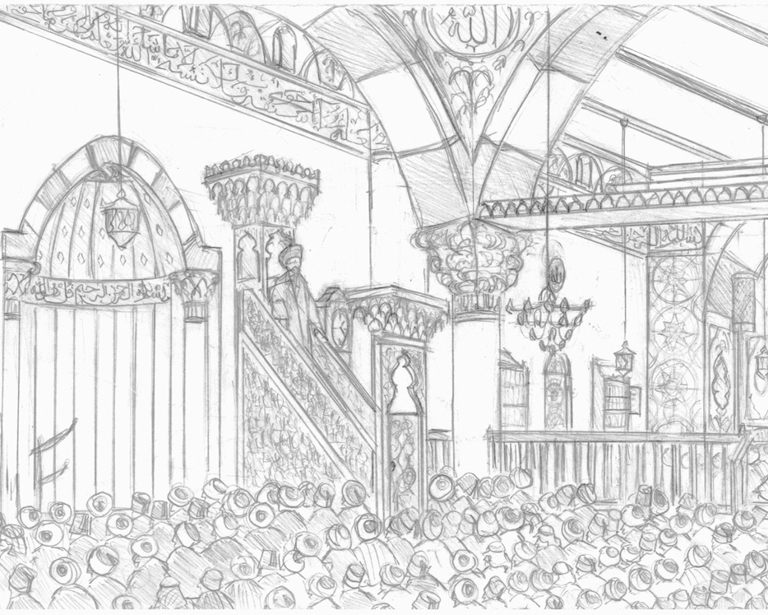
And among the spiritual figures whose influence later spread widely across the Muslim world was Shaykh Abdul Qadir Jilani Rahmatullahi Alayh — known lovingly across South Asia as Ghaus-e-Azam. Though he lived slightly later than the early Abbasid peak, his spiritual legacy became deeply connected to the wider Islamic world shaped during Abbasid civilization. People traveled long distances to hear him speak. Not because he promised wealth or power… but because he reminded hearts about sincerity, patience, humility, and trust in Allah. He taught that knowledge without humility becomes arrogance. And spirituality without knowledge becomes misguidance.
For many ordinary Muslims — especially in places like Persia, Central Asia, Turkey, and later India — Sufi teachers became bridges between Islamic teachings and the emotional lives of common people. Through compassion, service, poetry, remembrance, and character, Islam spread not only through armies… but through hearts.
This would become especially important later in the Indian subcontinent. Because countless people in India would first encounter Islam not through kings… but through saints.
Through kindness. Through honesty. Through humanity. And this is what many later generations would sometimes forget: The core teachings of Islam brought by Prophet Muhammad ﷺ were rooted in mercy, justice, dignity, and the worship of One God.
The Prophet ﷺ taught kindness even toward animals. He condemned oppression. He warned against arrogance. He reminded believers that the strongest person is not the one who defeats others physically…but the one who controls anger and ego.
Yet throughout history, rulers — Muslim and non-Muslim alike — often used religion, politics, nationalism, or power for their own survival. And the Muslim world was no exception.
Some kings committed injustice while speaking in the name of Islam. Some scholars resisted them courageously. Some remained silent. And ordinary people continued searching for truth beneath the noise of politics.
Still, despite all its contradictions, the Abbasid era changed human civilization forever. Baghdad became a lantern of knowledge for the world. Ideas traveled across continents. Science flourished. Philosophy expanded. Architecture reached beauty. Spiritual traditions deepened. Civilizations connected. And for centuries, the Muslim world stood among the intellectual centers of humanity.
But history never remains still.
Luxury slowly weakened rulers. Political rivalries returned. Regional powers began rising independently. And far beyond the eastern horizons, another storm was gathering. A storm of fire, horses, and destruction unlike anything the Islamic world had ever witnessed before.
Soon, the libraries of Baghdad… the scholars of Islam… and the very heart of the Abbasid world… would face the terrifying rise of the Mongols.
End of Chapter 10